
SEO vs PPC: Which Strategy Works Better?
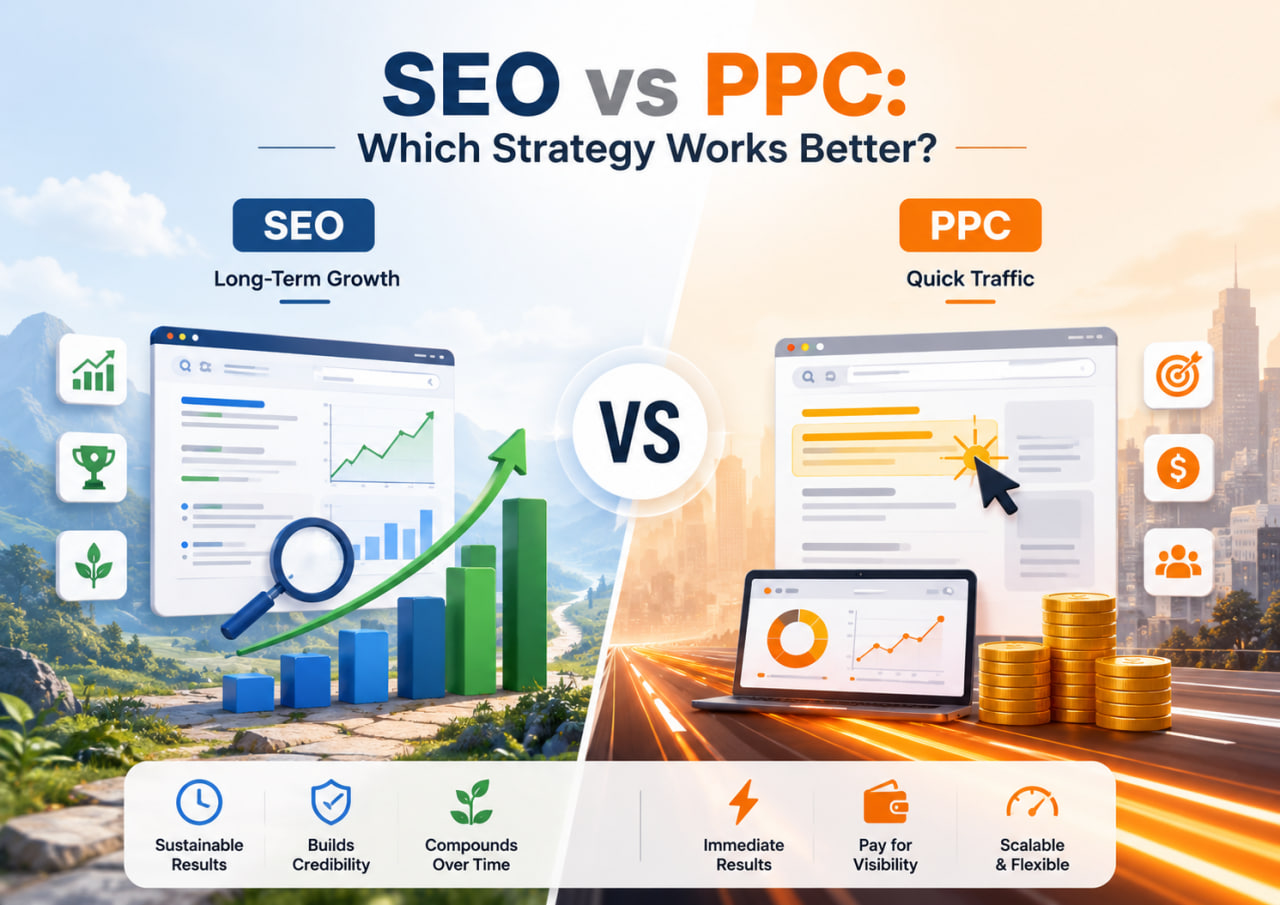
SEO vs PPC is not a question of which channel is “better” in every situation. The better strategy depends on your timeline, budget, margins, competition, and how people buy. SEO is stronger when you need durable visibility and trust. PPC is stronger when you need fast testing, quick leads, or control over exactly where and when you appear.
The real difference
SEO earns visibility through useful pages, technical structure, internal links, authority, and search intent matching. PPC buys visibility through ads, bids, landing pages, and audience targeting. Both can bring qualified traffic, but the economics are different: with PPC you pay for every click; with SEO you invest upfront and keep improving the asset.
SEO wins on compounding
A strong page can keep bringing traffic after the initial work is done. The return grows when content, links, and rankings improve together.
PPC wins on speed
Ads can start bringing clicks almost immediately. This is useful for launches, seasonal offers, testing, and urgent lead generation.
The best choice is often mixed
PPC data can reveal converting keywords, while SEO turns the best topics into long-term traffic assets.
SEO vs PPC comparison
| Factor | SEO | PPC |
|---|---|---|
| Speed | Slower start, usually needs consistent work before results become stable. | Fast launch, traffic can arrive as soon as campaigns are active. |
| Cost model | Costs come from content, technical work, links, strategy, and maintenance. | Costs come from clicks, bids, management, landing pages, and testing. |
| Trust | Organic results often feel more credible because users see them as earned. | Ads can convert well, but some users skip sponsored placements. |
| Control | Less direct control over ranking timing and exact placement. | Strong control over targeting, copy, budget, location, and schedule. |
| Long-term value | Can become a durable asset if rankings and content quality are protected. | Stops producing traffic when the budget is paused. |
Where each channel usually performs best
Typical strength by business goal
This chart is a practical planning model, not a universal rule. It shows where each channel tends to be stronger when budget, landing pages, and tracking are handled properly.
When SEO works better
SEO is the better main strategy when people search for your product every month, your margins cannot support expensive clicks forever, and you can invest in useful pages. It works especially well for educational intent, comparison searches, local services, evergreen problems, and categories where trust matters before a buyer contacts you.
The biggest SEO mistake is treating content like a volume game. A page should solve a real search problem better than the pages already ranking. That means clear answers, original examples, useful tables, relevant internal links, and a next step that matches the reader’s stage.
When PPC works better
PPC is stronger when you need traffic now, want to test a new offer, need visibility in a very competitive SERP, or sell something with a clear commercial intent. It is also useful when SEO data is missing: you can run ads, see which queries convert, then build organic pages around the winners.
The risk is waste. A campaign can look active while quietly burning money on weak keywords, broad targeting, poor landing pages, or leads that never become customers. PPC needs close tracking from click to sale, not just click to form fill.
Practical insight: if you are not sure where to start, run PPC for learning and build SEO for ownership. Ads show demand quickly. SEO turns proven demand into an asset you do not have to rent forever.
A smart combined strategy
| Stage | Use PPC for | Use SEO for |
|---|---|---|
| First 30 days | Testing keywords, offers, locations, and landing page angles. | Fixing technical issues and mapping pages to real search intent. |
| Months 2–3 | Keeping leads moving while organic pages are still maturing. | Publishing service, comparison, FAQ, and local pages with internal links. |
| After traction | Defending high-value terms and retargeting visitors who did not convert. | Scaling pages that already show impressions, leads, or ranking movement. |
Bottom line
PPC is better when speed and control matter most. SEO is better when trust, margin, and long-term visibility matter most. The strongest search strategy usually uses both: PPC to learn and capture demand now, SEO to build the pages that keep working after the ad budget stops.